
Surroundings
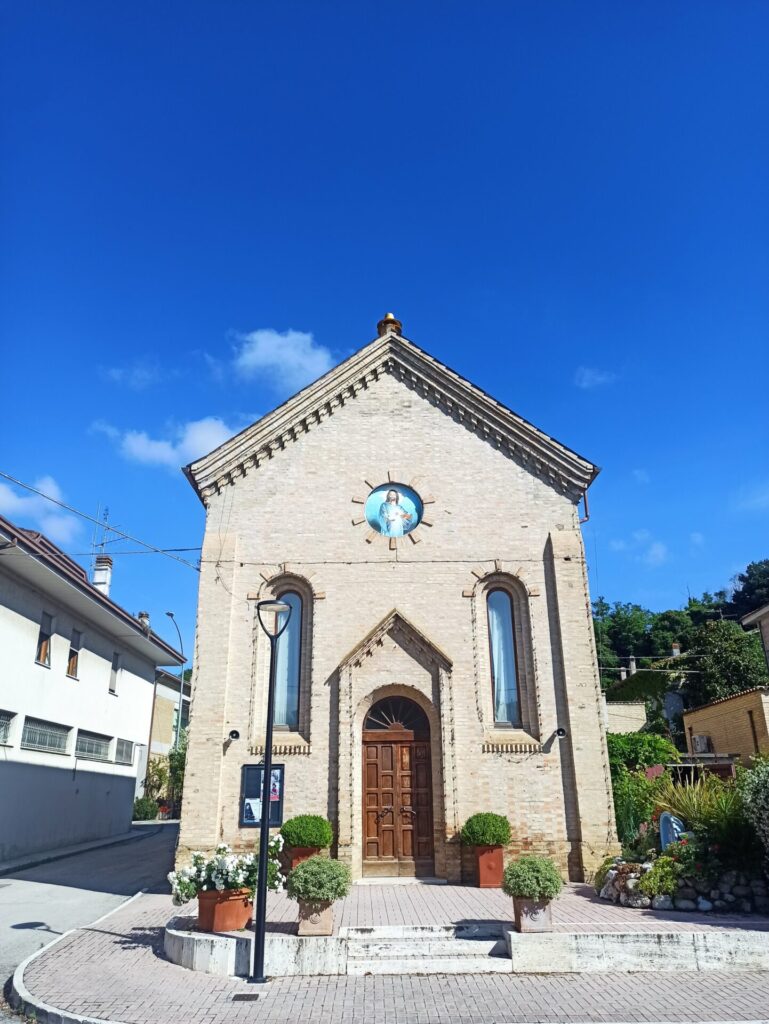
Rubbianello
Heading down along the Aso valley, no more than 6 km away, here is the hamlet of Rubbianello.
Around the 1930s, Rubbianello appeared as a small group of houses in the vicinity of the mill, the true historic center of this area. The existence of the mill dates back to 1712, as evidenced by a brick embedded in its old wall.
The area was originally called “Contrada Piani,” because it began to develop in the valley of the Aso River.
The need for a church for this hamlet was fulfilled by a plan probably implemented by Bishop Marcello Manfroni from Petriolo. This plan provided for the construction of the church near the mill, a meeting point of the valley’s inhabitants and the natural confluence of the roads connecting Monterubbiano, Montotto and Montefiore dell’Aso.
As the elders still remember, the entire population of the valley contributed to the construction works, both economically through offerings and in terms of workforce, providing wagons and oxen to transport the bricks from the kiln and the sand from the river.
The church was completed with a Nov. 13, 1932 blessing by Archbishop of Fermo Monsignor Carlo Castelli.
All the furnishings of the old church were moved to the new one, dedicated to Sacred Heart of Jesus. All that has come down to us is a beautiful small canvas (82×60 cm), depicting the Virgin and Child and St. Lucia. Its origin is uncertain although some argue it was donated from one of the Monterubbiano churches, most likely from the church of S. Maria dell’Olmo (S. Lucia).
In 1995, it underwent a renovation that was able to create the right balance between the original structure and the entirely new, sober, clean, and elegant look, with a hint of modernity that does not disrupt the atmosphere of recollection.
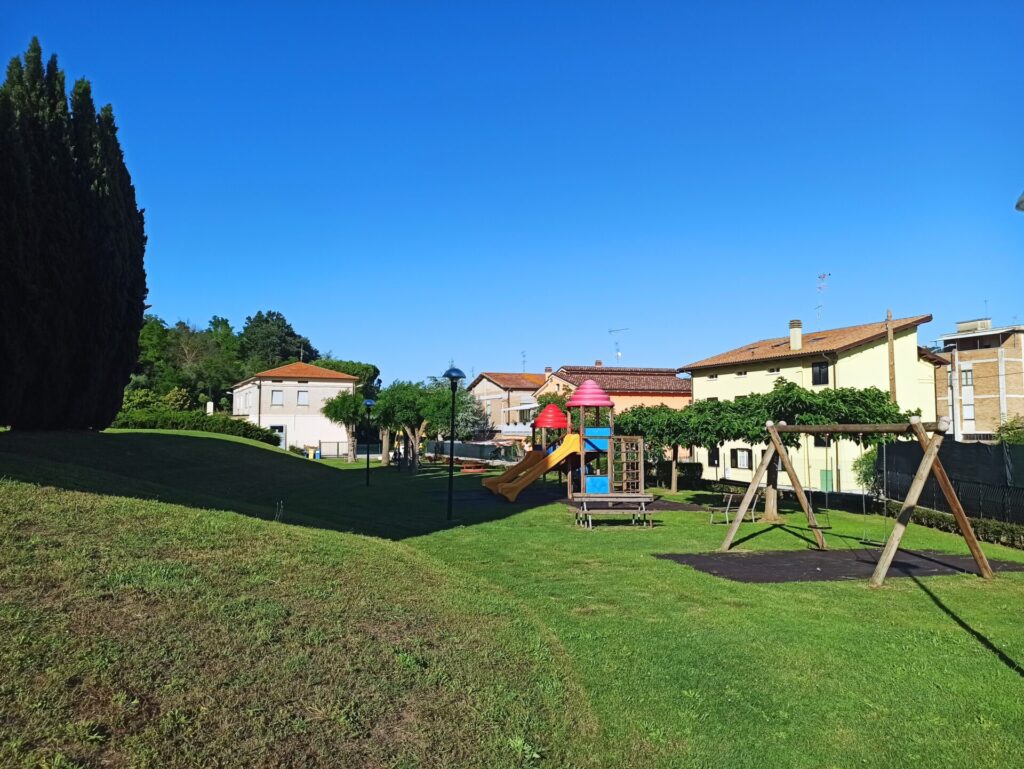
Don Bosco Center
It is a wonderful recreational and sports facility, established upon initiative of the parish of the Rubbianello hamlet, built with little funds and volunteer work from the entire Rubbianello community.
It was created in response to the need for a gathering place for youth and adults.
Currently, the facility is managed by the “Centro Ricreativo Sportivo Parrocchiale San Giovanni Bosco” Association, which has been responsible for its development and maintenance in recent years. In addition to the lighted soccer field, it also houses a playground for children and a sports hall. The Center is named after Don Bosco, the Father, Teacher and Friend of young people, who dedicated his entire life to them.
The Don Bosco Center is the heart of the hamlet for all the recreational events that make Rubbianello alive.
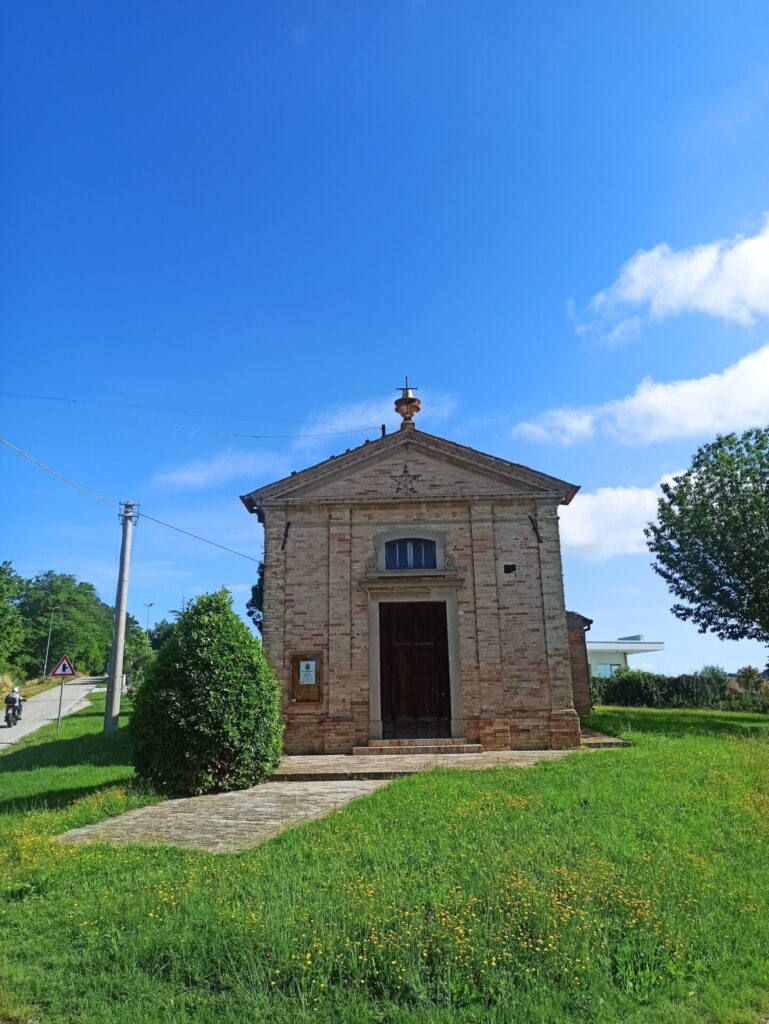
Montotto
On the provincial road to Petritoli, just 4-5 km away, here is Montotto, the other hamlet of Monterubbiano.
Montotto is a small urban center, inhabited by about a hundred people. Its height above sea level is 294 m, the climate is mild and the land declines slightly toward the valley of the Aso River. From here it is possible to admire the wonderful southern landscape of Monterubbiano.
There is a church dedicated to Our Lady of the Rosary, whose statue was donated by Leoni Domenico in 1942.
The first inhabited area of Montotto was formed in the 5th and 6th centuries when some Monterubbiano people – in order to escape the looting and devastation of the barbarian hordes -sought refuge nearby, settling on the hill where today’s hamlet stands.
The oldest document concerning the Villa of Montotto dates back to 1182 and is still kept in the secret and diplomatic archives of the Fermo Library. It features a peace treaty with Fermo, to which Monterubbiano, Coccaro and Montotto submitted.
In addition, from other documents we can infer that at the end of the 12th century the three towns of Monterubbiano, Coccaro and Montotto lived united in a federative bond, governed by their own lords and had about the same importance, with a certain prevalence of Monterubbiano.
The largest group of cottages in Montotto stood primitively around the hill that is noted upon entering the hamlet, at the top of which the church with its small cemetery had been built.
In 1300, when Monterubbiano reached its greatest prosperity with seven thousand inhabitants, the decline of this hamlet began. Around 1326 Montotto had lost any autonomy and had become just a hamlet of the main town.


