
Palaces
The historic buildings that grace the little town are full of charm, stories and rich in suggestions, settings for events and protagonists of great storytelling.
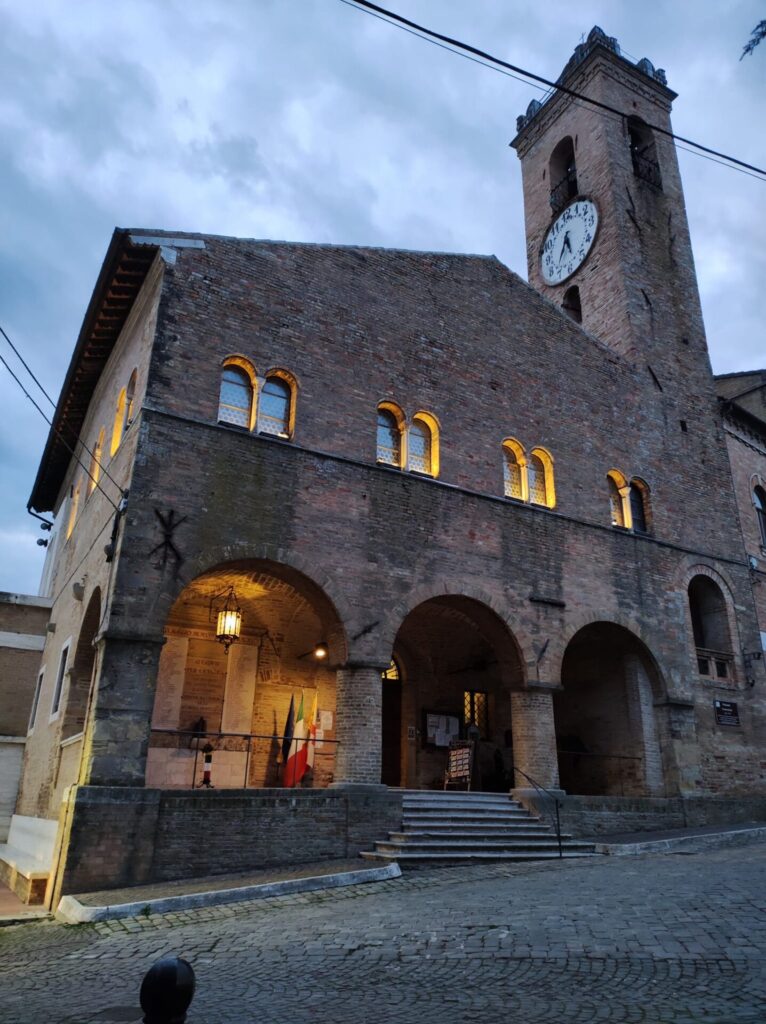
Palazzo Comunale
The Palazzo Comunale (Municipal Palace) was built in the 14th century in a barycentric area of the center. The structure of the building is still recognizable in its compactness and regularity. From the north side it is possible to observe the distinctive raised entrance portico and the mullioned windows on the first floor, reopened in 1900, with Venetian glass that gives the council chamber a special illuminating effect. The tower, which rises majestically over the town’s main square, has Ghibelline crenellations.
Inside the council chamber of the municipal palace there is the Quadreria, which collects pictorial works owned by the municipality: some 20 paintings, mostly oil on canvas, from the 16th and 17th centuries representing religious subjects and others. The signature style is that of the Roman, Emilian and especially the Marches school of the time. There are also some copies of important works by Domenichino, Daniele da Volterra, Botticelli and Carlo Crivelli.
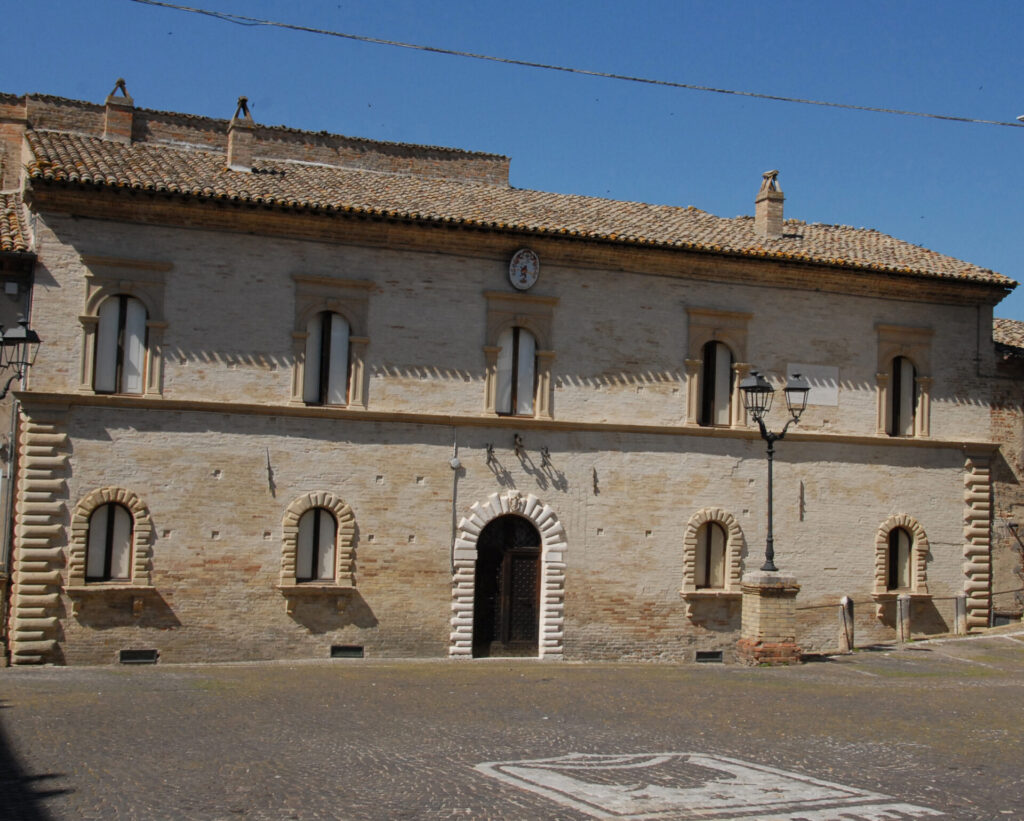
Palazzo Calzecchi Onesti
The Palazzo Calzecchi Onesti, built between 1553 and 1562, is one of the most significant monuments in Monterubbiano with its overlook garden and noble facade on the main square, a tangible sign of the power of the Ravenna family.
The typical 16th-century style is found here unchanged in the forms and elements that define the architectural composition and are influenced by the most important Tuscan and Roman palaces.
This palace was home to physicist Temistocle Calzecchi Onesti, who in 1880 invented the Coherer, an instrument used by Guglielmo Marconi for the invention of the telegraph. An important descendant of the family is Rosa Calzecchi Onesti, known for her virtuoso translation work of the Iliad, Odyssey and Aeneid. The palace cannot be visited inside except by appointment.

Palazzo Secreti
The Palazzo Secreti is a building of special importance dating back to the 17th-18th centuries. It was erected on the ruins of the Cassero of the Sforza castle, which already existed in the first decade of the 13th century. It consists of several built units that in some parts incorporate the structure of the Sforza walls and inside have vaulted rooms.
The palace is partly still inhabited by the family of the same name.


