
Polo Culturale San Francesco
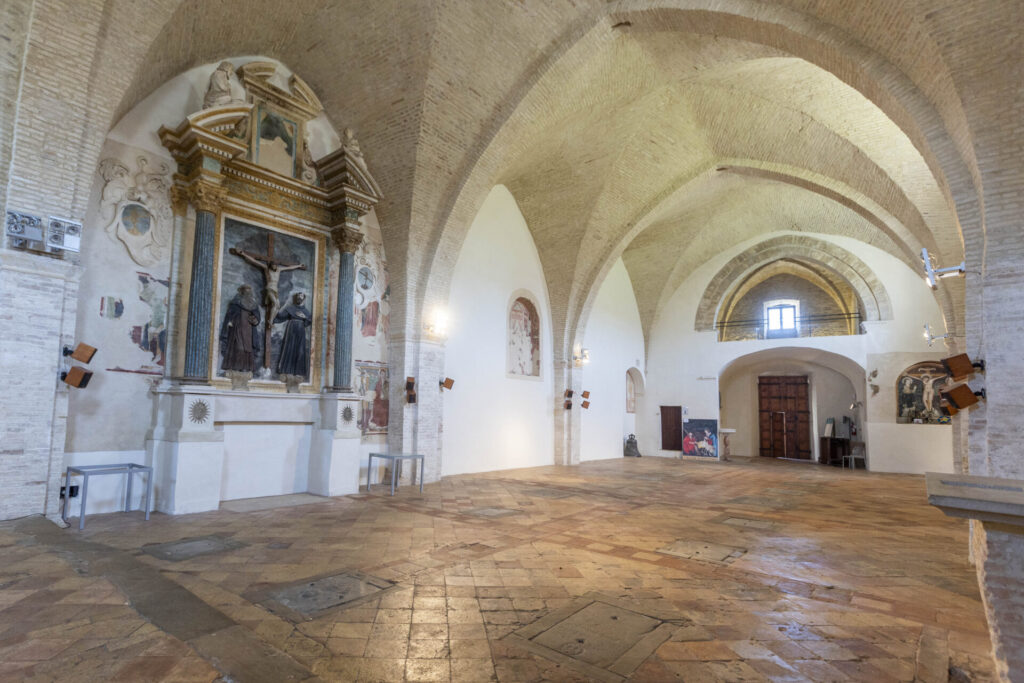
Polo Culturale San Francesco
The Polo Culturale San Francesco in Monterubbiano received the recognition of “Italian Wonder” in December 2012 thus joining the one thousand places of excellence selected by the National Youth Forum.
The Polo is a multipurpose facility built through the reclamation and reuse of a 13th-century Franciscan convent. It includes: the auditorium, the civic archaeological museum, the library, the “Rosa Calzecchi Onesti” exhibition hall, the environmental education center (CEA Giano) and a tactile officinal garden. Reopened to the public on September 23, 2007, ten years after the earthquake that had severely damaged it, the Polo is an important example of Franciscan convent architecture founded by the beatified Lucido and Matteo, close followers of St. Francis.
The church accommodates with great balance the overlays of the transformations over the years and the cycles of 15th-century frescoes superimposed on several layers, which blend perfectly with the architecture of the 18th-century wood and stucco altars. In addition, in the cloister of the monastery a tactile officinal garden can be visited and enjoyed through an olfactory pathway at different heights: the Franciscans were great connoisseurs of the healing properties of various plant species.
The Polo Culturale San Francesco is also the perfect location for both religious and civil weddings. Civil weddings can be held inside the St. Francis Church, which can also host receptions
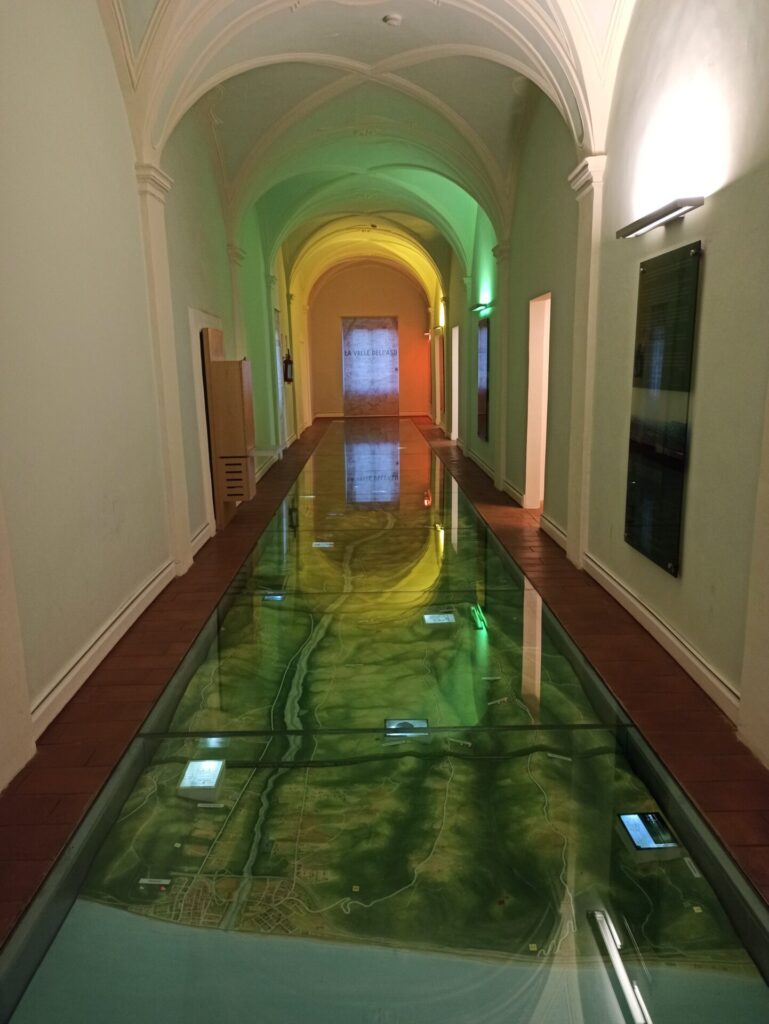
The Civic Archaeological Museum
The museum project was designed with a focus on accessibility issues. The works on display can be enjoyed by all types of users, with particular attention to the blind visitors for whom audio aids, braille cards and copies of artifacts have been made available for tactile exploration.
A large part of the convent wing has been dedicated to the setting up of the Civic Archaeological Museum, which preserves evidence of history, attributable to a time span ranging from prehistoric to medieval times, and documenting an uninterrupted continuity of settlement in the Monterubbiano territory. The display of artifacts is divided into four rooms according to a chronological order; in addition, the floor of the corridor is made up of a walkable model representing the Valley of the Aso River, from its mouth to its source, which, with the help of box-light displays, points out the archaeological findings that occurred in the area.
One room is dedicated to the numismatic collection – about five hundred coins – from various states and various eras, which belonged to Dr. Stefano Mircoli.


