
Theater
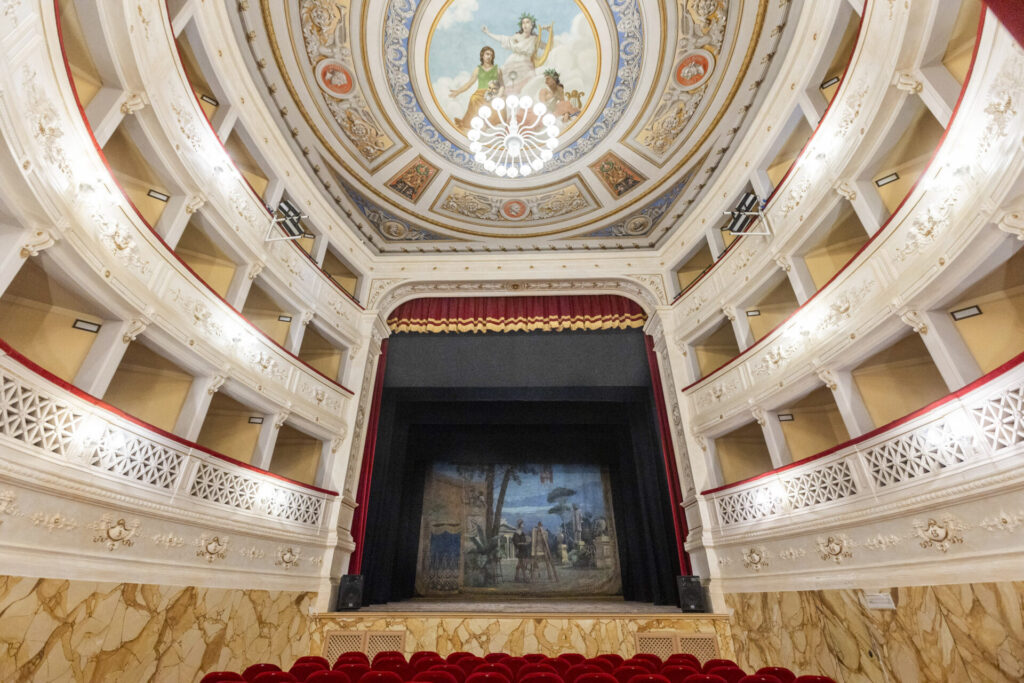
Teatro Vincenzo Pagani
In 1875 the new masonry theater along Via Roma was inaugurated in the area of a 16th-century palace known as “the Palazzaccio,” which belonged to the Pagani family, the same as the well-known painter Vincenzo to whom the theater is dedicated. The imposing exterior facade is characterized by late Gothic lines and at the top features a Neoclassical-style gable with the plaster inscription “Teatro Pagani.”
Upon entering the interior through one of the three doors, one is immediately immersed in the stalls. The floor plan of the hall is horseshoe-shaped, as was the custom of the time, with three tiers of boxes for a total of 231 seats. The first tier has a distinctive wooden parapet with fretwork design and gilded decoration. Equally remarkable is the 1879 ceiling, made by Gregorio Marinelli from Sant’Elpidio a Mare and representing Comedy, Tragedy and Music: it was made with the technique of incannucciata, that is, plastered reed matting.The historic curtain, made in 1881 by Alessandro Bazzani, is a tribute to Vincenzo Pagani, depicted with his stock-in trade in the act of painting a canvas.
Above the stage, the original stage mechanisms are still visible.


